
 By
By For years, Apple CarPlay has been the quiet hero of the daily commute. Plug in your iPhone, and suddenly your car’s infotainment screen becomes a familiar extension of your phone. Maps, messages, music – all where you expect them. But let’s be honest: the experience has started to feel a bit long in the tooth. The interface hasn’t changed much since 2014, and Siri still struggles with basic requests half the time.
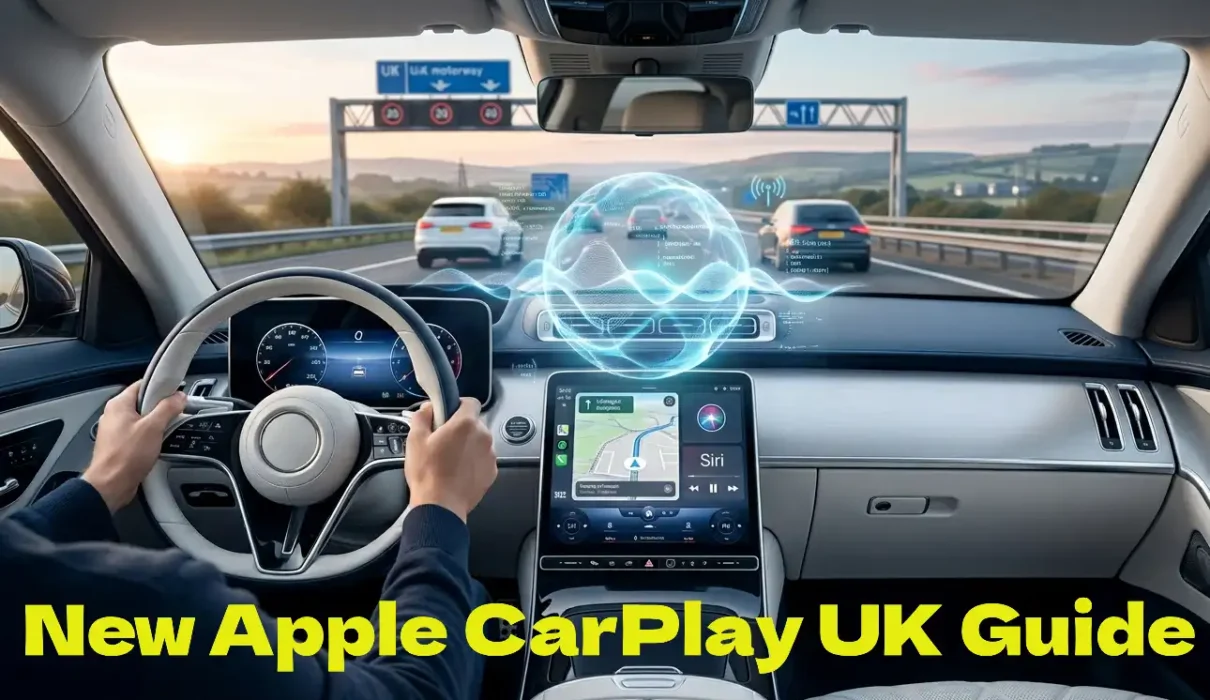
That’s finally changing. Apple’s next-generation CarPlay promises something genuinely different. Think full dashboard integration, customisable instrument clusters, and a Siri that actually understands what you mean. The headline act is Apple Intelligence – the company’s new AI framework – and it’s bringing proper smarts to the car.
For UK drivers, the question is no longer if this is coming, but when and which cars will actually support it. This guide breaks down everything you need to know.
What Is Apple’s New CarPlay?
Here’s the simplest way to think about it: the CarPlay you know today basically mirrors your phone. The new version becomes your car’s operating system. Apple announced the next-generation CarPlay back in 2022, but we’ve only recently seen real movement. The core difference is depth. Current CarPlay only controls the central touchscreen – your speedometer, fuel gauge, and climate controls remain on the car’s own system. That creates a disjointed experience.
The new CarPlay takes over everything. Speedometer. Tachometer. Battery gauge. Temperature dials. Even the little warning lights. Apple has designed dozens of instrument cluster layouts, and car manufacturers can choose which ones suit their brand. That matters because it solves one of the biggest frustrations with modern cars: terrible native software.
How Siri AI Enhances the CarPlay Experience
Let’s talk about Siri. For the past decade, asking Siri to do anything in the car has been a gamble. “Call Sarah” often dials the wrong person. “Navigate to the nearest petrol station” sometimes starts playing a random podcast.
Apple Intelligence changes the underlying mechanics. Instead of Siri trying to match keywords, it now understands context, conversation history, and your personal data (with your permission). In practice, this means you can speak naturally. You don’t have to memorise rigid commands.
For drivers, the benefit is reduced cognitive load. You spend less time thinking about how to ask something and more time focusing on the road. That’s not a minor improvement – it’s a genuine safety feature.
Top Siri AI Features Available in the New Apple CarPlay
Smarter Navigation Assistance
The navigation experience becomes genuinely predictive. If you regularly drive to the gym at 6pm on Tuesdays, CarPlay will surface that route before you even ask. It learns your routines and adapts to real-time traffic without you having to tap anything. Imagine leaving work on a Friday – CarPlay knows you usually stop for groceries, spots a delay, and offers an alternative that still passes the supermarket.
AI-Powered Messaging
When a message arrives, Siri reads a quick summary without opening the conversation. It identifies who sent it and the general sentiment. Then you can dictate a reply naturally, and Siri sends it without further confirmation. Group chats also get summarised: instead of hearing three names, you hear the actual substance of the conversation.
Better Media Control
Siri now understands more complex requests across different apps. You can say: “Play something upbeat from my driving playlist, but skip anything by that band I don’t like.” Or: “Find the episode of that history podcast where they talked about Roman roads.” It pulls from Apple Music, podcasts, and third-party apps using the same natural language engine.
Personalised Driver Assistance
Calendar integration becomes genuinely useful. If you have a meeting scheduled across town, CarPlay proactively suggests when to leave based on current traffic. Reminders work more intelligently: “Remind me to check my tyre pressure when I arrive at the service station.” Siri understands the sequence and executes it without additional prompts.
Apple Intelligence and CarPlay: What’s New?
Apple Intelligence is the broader AI platform that powers these improvements. The key difference from other AI systems is privacy. Most processing happens on your iPhone rather than in the cloud. That matters in a car because you’re often moving between cellular towers and driving through tunnels. On-device processing means Siri keeps working even when your connection drops.
What can you realistically expect at launch? Smoother voice recognition, contextual understanding, and proactive suggestions. You won’t get a full self-driving assistant. But you will get an assistant that feels competent rather than frustrating.
Which Cars Support the New Apple CarPlay in the UK?
Here’s where things get complicated. The next-generation CarPlay requires deep integration with the vehicle’s systems. Car manufacturers have to actively choose to support it and then implement it properly.
Confirmed supporters include:
- Aston Martin – specific design integrations for future models
- Porsche – planning full dashboard integration
- Hyundai and Kia – both groups have committed to the new platform
- Genesis – following the same path as Hyundai
- Jaguar Land Rover – UK’s biggest luxury manufacturer is on board
The reality is that existing cars will not support the next-generation CarPlay. It requires new hardware and software architecture. If you bought a car in 2023 or earlier, you’re almost certainly stuck with the current version of CarPlay.
For UK buyers, the first cars with full support are expected from Porsche and Aston Martin in late 2026, with mainstream brands following in 2027.
New Apple CarPlay Release Date and UK Availability
Apple has been quiet on exact dates, which usually means things are taking longer than expected. The current timeline looks like this:
- Late 2025 – First vehicles with partial support appear (mostly luxury brands)
- Mid 2026 – Wider rollout begins, starting with Porsche and Aston Martin
- Late 2026 to early 2027 – Hyundai, Kia, and Genesis models adopt the platform
- 2027 onwards – Mass-market availability across more brands
UK availability will broadly align with global launch dates. You’ll also need an iPhone running iOS 18 or later. Apple Intelligence requires an A17 Pro chip or newer – so iPhone 15 Pro, iPhone 16, or later models.
How the New CarPlay Compares with Android Auto
Google hasn’t been sitting still. Android Auto now includes Gemini AI features, and Google’s automotive OS already offers deep vehicle integration. Here’s how they stack up.
| Feature | New Apple CarPlay | Android Auto / Google Built‑in |
|---|---|---|
| AI assistant | Siri with Apple Intelligence (on‑device, privacy‑focused) | Gemini AI (cloud‑dependent, more conversational) |
| Navigation | Apple Maps with predictive routing, live traffic | Google Maps (superior traffic data, better POI database) |
| Vehicle integration | Full dashboard + instrument cluster (optional) | Full dashboard integration available on Google Built‑in models |
| Privacy | On‑device processing, minimal data sharing | Heavier cloud dependence, more Google data collection |
| Ecosystem fit | Best for iPhone users | Best for Android users, but works with iPhones |
The honest take: both systems are excellent. If you live in the Apple ecosystem, CarPlay is the more natural choice. If you use Google services heavily – Gmail, Google Maps, Calendar – Android Auto will feel more integrated.
Benefits of the New Apple CarPlay for UK Drivers
- Reduced distraction – Good voice control means less screen interaction, more attention on the road.
- Seamless navigation – Predictive routing that learns your habits. If you always avoid the M25 at rush hour, CarPlay figures that out.
- Better communication – Message summarisation and voice replies that actually work.
- Calendar integration – Suggests departure times, accounts for traffic, and adjusts as plans change.
- Consistent interface – One less thing to re-learn every time you change cars.
Frequently Asked Questions
Final thoughts
The new Apple CarPlay represents a genuine step forward for in-car technology. Not because it’s flashy, but because it solves real problems. Bad voice assistants distract drivers. Fragmented interfaces frustrate everyone. And car manufacturer software remains, with few exceptions, terrible.
Apple’s approach – deep integration, privacy-focused AI, consistent design – addresses all of those issues. The waiting game is frustrating, particularly for UK drivers who often see new technology later than the US. But the cars arriving in late 2026 and 2027 will offer an infotainment experience that actually feels modern.
For now, if you’re buying a new car, check whether the manufacturer has committed to supporting the next-generation CarPlay. If they haven’t, you might want to wait. Because once you’ve used an AI assistant that actually understands you, it’s hard to go back. Follow UKTechWire for more tips!

Jalees Ur Rehman is an SEO professional with 13+ years of experience in SEO and Digital Marketing. He helps businesses grow organic traffic and conversions through data-driven digital marketing strategies and practical execution.